Green roof with flowers
Bring color and nature to your roof with a green roof featuring wildflowers, herbs, and hardy sedum varieties. Discover which type of flower roof suits your roof, preferences, and budget.
Make appointmentWhy choose a green roof with flowers?
A green roof with wildflowers brings color and nature to a flat or gently sloping roof. Depending on the load-bearing capacity and your preferences, you can choose between a light sedum-herb roof or a richly blooming native wildflower meadow.
Why choose a green roof with wildflowers?
Increase biodiversity and attract bees and butterflies
Retains rainwater and helps keep the area cool
Protects the roofing from the sun and temperature fluctuations
Provides a changing display of colors from spring through fall

Which green roof with flowers is right for you?
Not every green roof is the same. The best choice depends on your roof’s load-bearing capacity, the look you want, and how much biodiversity you want to add.


Sedum roof
Low maintenance and lightweight green roof for flat and gently sloped roofs.
View sedum roof

Sedum herb roof
Green roof with sedum and herbs for more biodiversity and variety.
View sedum herb roof

Native rooftop flower meadow
Biodiversity green roof with native flowers and herbs.
View native rooftop flower meadow
Green roof insulation (XPS)
Green roof with XPS insulation, ideal for energy savings and a pleasant indoor climate.
View insulation green roof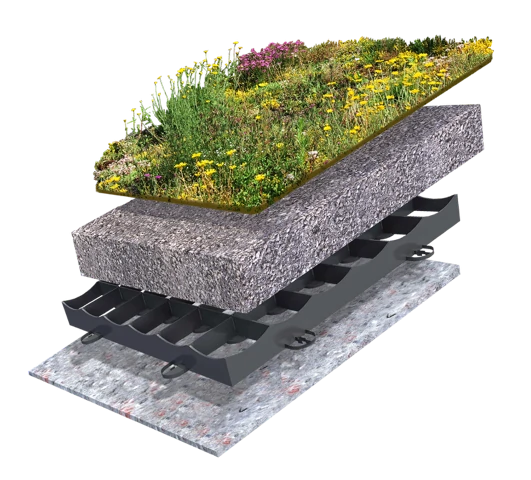
Inclined Green Roof
Green roof for pitched roofs up to 45°, specially designed for stable planting on sloping surfaces.
View sloped green roof
Retention roof (blue roof)
Green roof with water buffering to reduce peak sewer load.
View retention roof

Biobased green roof
Green roof with natural, biobased materials such as cork, jute and hemp.
View biobased green roof
Is your roof suitable for a green roof?
A green roof can be installed on many flat and gently sloped roofs. However, the load-bearing capacity, roofing material, and drainage must be suitable. That’s why we check in advance which system is safe for your roof.
Here’s what we look for
- Load-bearing capacity
A sedum roof is lighter than a full-scale rooftop flower meadow. The structure determines what type of installation is possible. - Roofing
The roof covering must be watertight, in good condition, and root-resistant where necessary. - Roof pitch
Various floral roofs are possible on flat and slightly sloping roofs. For steeper slopes, a modified stabilization system is required. - Water drainage
Rainwater must be able to be properly buffered, and excess water must be able to flow safely to the drain. - Position of the roof
Sun, shade, and wind influence the choice of flowers and herbs, and the necessary care.
Featured green roofs


Sedum herb roof
A colorful roof full of herbs and flowers, good for nature and biodiversity.
Read more
Native Wildflower Roof
A thriving nature roof that enhances biodiversity and beautifies your surroundings.
Read more
Insulation
A green roof that combines energy conservation with sustainability and comfort.
Read moreSloping green roof
A soothing roof that brings together nature, well-being and biodiversity.
Read moreWhat wildflowers grow on a green roof?
Plants on a roof are exposed to sun, wind, heat, and periods of drought. That is why we use hardy, low-growing varieties that are well-suited to the conditions on the roof.
Depending on the system chosen, the plantings consist of flowering sedum varieties, herbs, and native flowers. Examples include thyme, wild marjoram, wild carnation, yarrow, knapweed, and meadow crown. We tailor the exact composition to the roof and the desired look.
A roof that changes with the seasons
- Spring
The first herbs and flowers are beginning to grow, providing food for early bees and bumblebees. - Summer
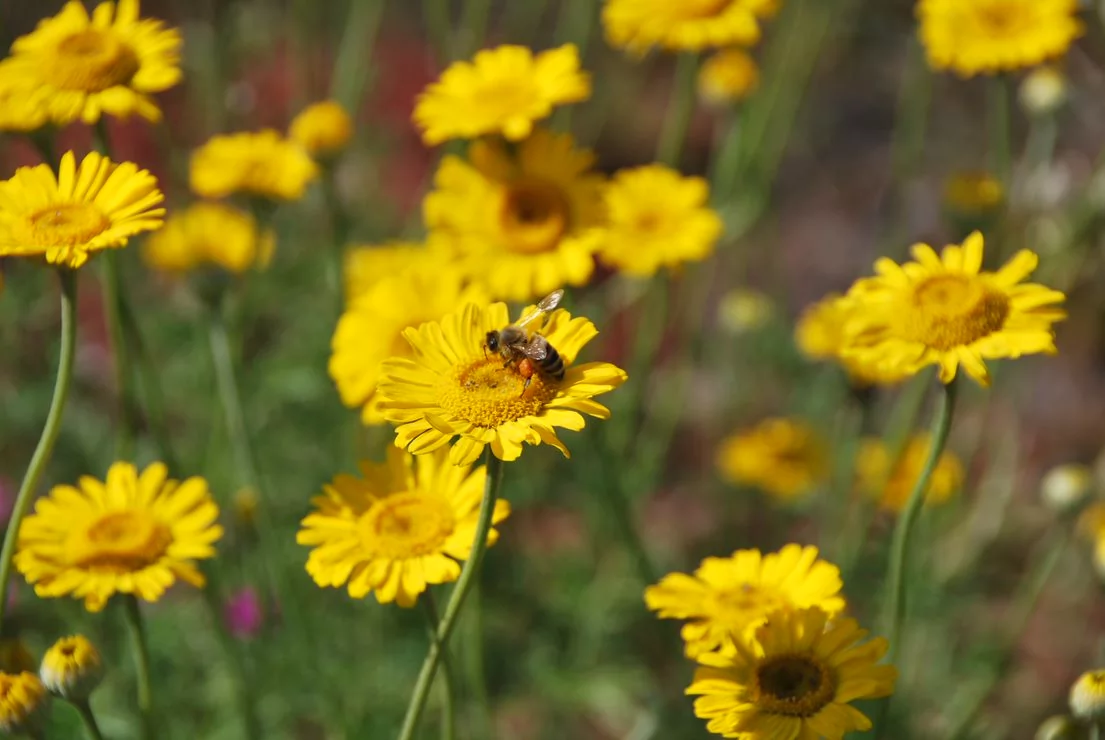
The flower roof is in full bloom and attracts bees, butterflies, and other insects. - Fall
Late-blooming varieties and seed heads provide color, texture, and food for animals. - Winter-
A rooftop flower meadow isn’t lush and green all year round. Many plants go dormant temporarily and reappear in the spring.
Would you like a roof with a long blooming season and maximum biodiversity? Then check out our solution featuring native flowers and herbs.
How much maintenance does a green roof with flowers require?
A flower roof requires a little more attention than a standard sedum roof, but maintenance is minimal. With one or two maintenance sessions per year, the vegetation stays healthy and unwanted plants are removed in a timely manner.
Extra monitoring is especially important during the first year. The plants still need to establish strong roots and may require additional water during prolonged dry spells.
Proper maintenance not only ensures more flowers, but also protects the drainage system and extends the life of the green roof.
What happens during a service?
We remove unwanted vegetation, inspect the roof edges and rainwater drains, and check for any bare spots that may have developed. If necessary, we adjust the planting or provide the green roof with appropriate nutrients.
In a rooftop flower meadow, the vegetation can be mowed in phases once or twice a year. By not mowing everything at once, food and shelter remain available for insects.
When does a green roof need extra attention?
During prolonged droughts, watering may be necessary, especially during the first growing season. It’s also a good idea to check on the plants after a severe storm, prolonged rain, or work on the roof.
Don’t want to worry about maintenance? Then have your flower roof inspected periodically by our green roof specialists.
See our flower roofs in action
Curious to see what a green roof with flowers actually looks like? Check out three projects in which we transformed a bare roof into a colorful, biodiverse habitat.


Methodology
Not so handy yourself or afraid of heights? Then let Green Roof Specialist take care of the entire installation. We proceed according to the four steps below.

Request
You can place your request directly with us through the website, by leaving your details. or call us directly.

Appointment
Installing a Green Roof is customized We will contact you for a personal consultation.

Personal advice
We will give you completely free, no-obligation advice and provide a customized quote.

Implementation
After you agree, our specialists will install the roof and supervise your subsidy application.
Frequently Asked Questions About a Green Roof with Flowers
Not every roof is automatically suitable. Among other things, we check the load-bearing capacity, roofing material, roof pitch, and water drainage. A roof inspection provides certainty about which green roof system is feasible.
The weight varies by system and is calculated based on a fully water-saturated state. A sedum-herb roof is generally lighter than an extensive roof meadow. Therefore, the roof’s load-bearing capacity must be assessed in advance.
For a flower roof, we use hardy varieties that can withstand sun, wind, and temporary drought. Examples include thyme, wild marjoram, wild carnation, yarrow, and other native flowers and herbs. The exact composition depends on the system chosen.
No, most flowers bloom from spring through fall. The blooming period and colors change throughout the season. Outside of the blooming period, many herbs, grasses, and seed heads remain visible and provide a valuable food source for insects and birds.
Usually, one or two maintenance visits per year are needed. During these visits, we check the drainage, remove unwanted vegetation, and prune the plants. During the first growing season, additional monitoring and watering may be necessary.
A well-designed green roof can withstand a wide range of weather conditions on its own. During prolonged droughts, supplemental watering may be necessary, especially shortly after installation and during the first growing season.
That varies by municipality and water district. Some programs reimburse a portion of the installation costs or offer a higher subsidy for a biodiverse green roof. We can help you explore the options for your location.
A sedum-herb roof combines sedum with low-growing herbs and remains relatively compact. A rooftop flower meadow contains a greater variety of flowers, herbs, and sometimes grasses. This creates more height, seasonal variation, and biodiversity, but also requires a thicker layer.